
AI
Agentic CRM Architecture, Protocols & Market Data 2026
Short answer
An agentic CRM integrates autonomous AI agents with deterministic systems of record to manage sales and service workflows. According to IDC Research (2025-06-19), 41% of organizations say they are already investing in AI agents for case management and service operations. Rather than directly writing unverified text into databases, these systems decouple probabilistic language reasoning from deterministic execution using structured tool-calling validation layers, cryptographic mandate verification, and auditable human override guardrails to maintain pipeline integrity.
Source: Caelion, https://caelion.app/blog/agentic-crm

“41% of organizations say they are already investing in AI agents, recognizing their value in case management and service operations where flexibility and responsiveness are critical.”
IDC Research, IDC
Sales operations break when probabilistic models manipulate core business databases without control. Uncontrolled large language model (LLM) agents write statistical approximations directly into fields that finance, revenue operations, and executive leadership rely on for board reporting, transforming reliable pipelines into corrupted ledgers (agentsarcade.com).
Architectural Shift: Probabilistic Models vs. Systems of Record#
A customer relationship management (CRM) platform operates as a deterministic system of record, defining revenue forecasts, pipeline stages, commission plans, and operational metrics (agentsarcade.com). In contrast, large language models function as probabilistic engines of prediction that calculate statistically likely token sequences rather than verifiable business facts. Allowing an autonomous agent to execute unvalidated natural language updates directly against customer accounts blurs this boundary.
To protect pipeline hygiene and database state from model drift, system architectures must strictly decouple probabilistic model reasoning from deterministic database updates (agentsarcade.com). Production implementations isolate the model's natural language evaluation behind programmatic function-calling interfaces. Within this decoupled topology, LLM agent writes are restricted behind deterministic function calling interfaces that output structured JSON decisions rather than free-text instructions.
Instead, the language model outputs structured JavaScript Object Notation (JSON) payloads that contain explicit tool invocations and proposed operational arguments (agentsarcade.com). This design treats the model purely as a reasoning agent: it suggests structured state transitions, while external execution engines enforce the state changes.
- Probabilistic reasoning
- Structured JSON tool call
- Deterministic validation layer
- CRM state mutation
Deterministic Guardrails and Validation Layers for Agent Execution#
Deterministic guardrails serve as the gatekeeper between proposed JSON function calls and persistent database updates (agentsarcade.com). A deterministic validation layer acts as an intermediate middleware abstraction between the language model orchestrator and the CRM API endpoints. This layer intercepts every agent-initiated tool call before execution to prevent hallucinated changes from corrupting record states.
Validation Gate: IF (Entity_Exists == TRUE) AND (Stage_Transition_Permitted == TRUE) AND (Score >= Threshold) THEN Execute();
When an agent emits a function call such as an update to a deal stage, the validation layer runs programmatic inspection routines (agentsarcade.com):
- Entity verification: Confirming the target account, contact, or opportunity identifier exists in the database before processing the request (agentsarcade.com).
- Lifecycle transition logic: Validating the proposed stage progression against established CRM sales rules, such as preventing a direct hop from discovery to closed-won without intermediate qualification.
- Confidence parameter gating: Requiring explicit model confidence scoring to meet or exceed an administrative threshold before permitting field mutations.
- Contextual verification: Checking historical CRM logs and interaction records to confirm the customer relationship context corroborates the update.
If an agent's request fails any rule in this sequence, the validation layer rejects the tool call immediately (agentsarcade.com). By isolating probabilistic generation behind deterministic gatekeepers, model hallucinations remain internal reasoning events that fail to mutate persistent pipeline records.
Enterprise Adoption Patterns and Market Growth Drivers#
Enterprise investment is shifting capital expenditure from static workflow engines toward autonomous agentic architectures. According to IDC Research (2025-06-19), 41% (idc.com) of organizations say they are already investing in AI agents for case management and service operations. This expansion is visible in long-term enterprise budget trajectories. Technavio projects the CRM market to increase by USD 77.99 billion, at a CAGR of 10.9% from 2025 to 2030 (technavio.com).
| Publisher | Metric Description | Value | Forecast Period |
|---|---|---|---|
| IDC Research (idc.com) | Organizations investing in service and case management AI agents | 41% | 2025 |
| Technavio (technavio.com) | CRM market incremental revenue growth | USD 77.99 billion | 2025 to 2030 |
| Technavio (technavio.com) | CRM market compound annual growth rate | 10.9% | 2025 to 2030 |
Technavio identifies the primary growth driver over this forecast window as the transition from reactive automation to autonomous AI agentic orchestration (technavio.com). Organizations are prioritizing systems that orchestrate end-to-end customer tasks over legacy software that merely tracks manual updates (idc.com).
Integration Architecture: Case Study of Jaid Agentic CRM#
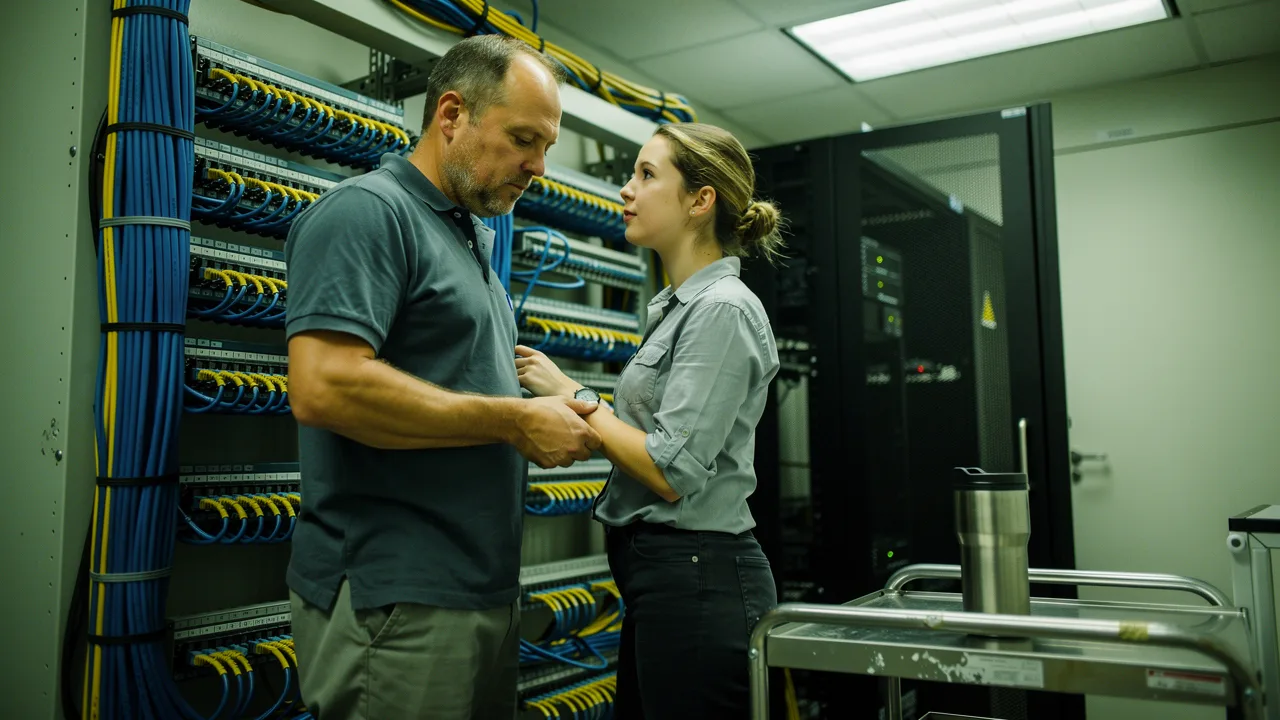
Commercial deployments demonstrate how asynchronous processing layers connect unstructured external communications with legacy transactional data stores.
Document Extraction and Case Workflow Automation#
Jaid Agentic CRM provides a cloud-hosted software-as-a-service (SaaS) architecture designed to process complex communications across diverse communication channels (applytosupply.digitalmarketplace.service.gov.uk). The platform ingests unstructured data from customer correspondence and inbound documents, automatically extracting structured information for enterprise databases.
Once structured data is extracted, the system runs classification logic to categorize incoming issues and execute downstream workflow tasks (applytosupply.digitalmarketplace.service.gov.uk). This pipeline operates asynchronously, converting incoming text into structured records that feed downstream enterprise applications without requiring reps to manually enter data.
Extending Existing Case Management and Ticketing Infrastructure#
Jaid Agentic CRM can deploy as a standalone SaaS environment or integrate as an add-on extension to existing enterprise software (applytosupply.digitalmarketplace.service.gov.uk). This allows organizations to layer agent capabilities directly across:
- Centralized case management systems (applytosupply.digitalmarketplace.service.gov.uk)
- Enterprise ticketing systems
- Core business email servers
- Transaction processing systems
Once custom integration maintenance overhead begins to drain operational engineering cycles, that is the point to bring in Agentic CRM Software help. Operating across existing message servers and transactional pipelines prevents companies from having to execute expensive system replacements (applytosupply.digitalmarketplace.service.gov.uk).
Public Sector Compliance, Data Classifications, and Vulnerability SLAs#
Deployments in regulated environments require defined compliance boundaries. Jaid Agentic CRM supports the UK Government OFFICIAL data classification, while handling data with higher security classifications remains out of scope (applytosupply.digitalmarketplace.service.gov.uk).
Procurement for public sector deployments follows structured volume discount pricing tiers based on contract spend. Jaid Agentic CRM offers structured discounts on call-off contracts, giving an annual contract valued between £500,001 and £1,000,000 a 15% discount excluding VAT (applytosupply.digitalmarketplace.service.gov.uk).
Open-Source Agentic CRM Foundations#
Open-source repositories provide foundational architectures for running automated agentic CRM operations. Comp AI CRM is an open-source, agentic-first CRM repository built natively for AI agents (github.com).
Agent-native architectures decouple application user interfaces from autonomous backend processes, ensuring external agents can read context and execute actions via structured endpoints (github.com). These systems serve as reference environments for development teams examining how agent-driven workflows interact with programmatic datastores.
Agent-to-Agent Commercial Negotiation (A2CN) Protocol#
Authority Verification via W3C Decentralized Identifiers#
The Agent-to-Agent Commercial Negotiation (A2CN) protocol establishes secure commercial interaction between autonomous agents (github.com). Mandate verification within the A2CN protocol relies on World Wide Web Consortium (W3C) Decentralized Identifiers (DIDs) arranged in a two-tier verification model. This structure provides cryptographic proof of an agent's delegated authority to commit corporate capital before negotiation begins.
Cold-Start Handshakes via Session Invitations#
To facilitate negotiation between counterparties lacking shared infrastructure, A2CN defines a push-based Session Invitation handshake (github.com). This handshake protocol enables negotiating agents to coordinate and start commercial sessions even when parties do not possess pre-configured, permanently deployed endpoints.
Threshold Pauses and the AWAITING_HUMAN_APPROVAL State#
When an automated counteroffer exceeds an agent's delegated spending mandate, the A2CN protocol halts execution by transitioning to the AWAITING_HUMAN_APPROVAL pause state (github.com). The protocol holds the transaction in this state until a cryptographically signed approval receipt referencing the paused offer hash is received, providing verified human-in-the-loop governance for high-value commitments.
Mandate Threshold Check: IF Proposed_Offer > Approval_Threshold THEN Trigger State(AWAITING_HUMAN_APPROVAL);
Dual-Signed Transaction Records and Post-Commitment Lifecycles#
Upon successful negotiation, agreements are committed as immutable, content-addressed transaction records that are dual-signed by both counterparties (github.com). Following contract commitment, the A2CN protocol manages post-transaction lifecycles using four standardized, lowercase message schemas:
delivery_notice: A normative post-commitment message type defined by the protocol (github.com).delivery_acknowledged: A normative message type in the post-commitment lifecycle.dispute_notice: A normative message type specified for post-commitment lifecycle interactions.dispute_resolved: A normative post-commitment lifecycle message type.
Retrieval-Augmented Generation, Model Context Protocol, and Multi-Agent Orchestration#
Retrieval-augmented generation (RAG), the Model Context Protocol (MCP), and multi-agent orchestration are the three plumbing layers that let an agentic CRM read real records before it acts. Each one narrows the gap between what the model guesses and what the system of record says.
Retrieval-Augmented Generation Grounds Agents in CRM Records#
Retrieval-augmented generation pairs a language model with a search step over an external store. The idea was set out by Lewis and colleagues at Facebook AI Research in 2020 (arxiv.org). In a CRM, the store is the account history: emails, call notes, open deals, and past tickets. The agent fetches those records first. It then drafts its reply or tool call from them, not from memory alone. This keeps proposed updates tied to facts the validation layer can check.
Model Context Protocol Standardizes Tool Access#
The Model Context Protocol is an open standard that Anthropic released on 25 November 2024 for connecting AI assistants to the systems where data lives (anthropic.com). An MCP server exposes tools and data in one format. Any MCP-aware agent can then call them. For a CRM team, this means one connector for contacts, deals, and tickets instead of a custom bridge per model. Every call still passes through the deterministic validation gate described above.
Multi-Agent Orchestration and Human-in-the-Loop Control#
Multi-agent orchestration splits work across narrow agents. One agent qualifies leads. Another drafts follow-ups. A third updates deal stages. An orchestrator routes tasks and collects results. Narrow agents are easier to test, and each can hold only the permissions it needs. High-value steps still stop for a person, as the A2CN approval pause shows above. That human-in-the-loop step is the control point for anything that commits money or changes a forecast.
Sales Velocity as the Outcome Metric#
Sales velocity is the standard way to measure whether this plumbing pays off. The common formula multiplies the number of qualified opportunities by average deal value and win rate, then divides by sales cycle length in days. Agents can lift the inputs by cutting manual data entry and speeding follow-ups. Clean pipeline hygiene matters here: if agents write unvalidated stages, the velocity number itself becomes unreliable.
Evaluation Criteria and Open Research Questions for Agentic CRM#
Unmodified autonomous agent architectures fail to meet enterprise regulatory standards, including General Data Protection Regulation (GDPR) Article 22 rules on automated decision explainability, National Institute of Standards and Technology (NIST) AI Risk Management Framework transparency criteria, and EU AI Act conformity assessment mandates (doi.org). Regulatory compliance requires organizations to treat auditable decision trails, human override capabilities, and compliance-conscious data access policies as baseline design constraints rather than post-deployment additions.
Organizations with high institutional stakes must build programmatic human override capabilities into their infrastructure, as technical operational risks cannot be resolved merely by falling back to ad-hoc human reviews.
To prepare for an agentic deployment, engineering teams should evaluate their operational readiness this week using this audit checklist:
- Map legacy integration surfaces: Audit ticketing endpoints, transactional systems, and case management schemas to establish API integration boundaries (applytosupply.digitalmarketplace.service.gov.uk).
- Define policy validation filters: Implement deterministic validation layers to programmatically check entity existence, business rules, and confidence thresholds before any agent tool call executes (agentsarcade.com).
- Establish data classification boundaries: Document data ingestion pipelines to ensure sensitive data stays within certified classification scopes, such as the UK OFFICIAL tier.
- Enforce immutable audit logging: Build structured audit trails that track prompt versions, model tool invocations, and human override receipts to maintain regulatory compliance (doi.org).
| Regulatory Framework / Mandate | Specific Enterprise Requirement | Unmodified Agent Architecture Deficiency | Architectural Remediation Pattern |
|---|---|---|---|
| GDPR Article 22 | Explainability of automated decisions | Opaque, multi-step probabilistic reasoning chains | Explainability logging and deterministic JSON function calling |
| NIST AI RMF | System transparency and auditability | Lack of auditable execution substrate or prompt history | Auditable decision trails and prompt versioning embedded as initial constraints |
| EU AI Act | Conformity assessment and Article 14 human oversight | Absence of guaranteed intervention mechanisms and compliance logging | Dedicated human-in-the-loop oversight layer and AWAITING_HUMAN_APPROVAL pause states |
| Platform / Protocol | Deployment & Architecture Model | Core Integration Mechanism | Oversight & Compliance Controls |
|---|---|---|---|
| Jaid Agentic CRM | Cloud-hosted SaaS (private or multi-tenant) | Browser, API, and connectors for case management, ticketing, and email | OFFICIAL data classification ceiling; role-based access; ISO/IEC 27001 accredited |
| A2CN Protocol | Decentralized inter-agent protocol | HTTP Session Invitation handshakes and content-addressed schemas | W3C DID mandate verification; AWAITING_HUMAN_APPROVAL pauses; dual-signed records |
| Comp AI CRM | Open-source, agentic-first Next.js/NestJS/Postgres stack | Programmatic API endpoints and cron-based mailbox synchronization | Decoupled UI-to-agent interface with deterministic session management |
Agentic CRM Labor & Efficiency ROI Calculator
Estimates the net monthly and annual labor savings and software ROI realized by replacing manual CRM hygiene and case workflow entry with deterministic agentic CRM automations.
Hours Saved per Rep / Month:
Gross Monthly Value of Time Saved:
Net ROI on Agentic CRM:
Frequently Asked Questions
Will CRM be replaced by AI?
Rather than replacing CRM systems, agentic AI acts as an execution layer. Uncontrolled LLMs cannot serve as deterministic systems of record; they require CRM platforms, deterministic validation layers, and APIs to verify data and ground decisions.
Agentic crm certification
Jaid Agentic CRM holds ISO/IEC 27001 certification accredited by the British Assessment Bureau, with an accreditation date of Wednesday, 4 June 2025. In addition to ISO/IEC 27001, the platform maintains Cyber Essentials compliance and quality management systems (QMS). For public sector deployments, it is certified to support UK Government data up to the OFFICIAL classification tier, whereas higher data security classifications remain outside the platform's supported scope.
What is an agentic organization?
An agentic enterprise employs autonomous AI agents to orchestrate complex operational workflows, dynamic service operations, and inter-company commercial interactions within strict deterministic policy, compliance, and human oversight boundaries.
Agentic sales
Agentic sales uses autonomous AI agents to monitor customer communications, update pipeline stages via structured tool calls, and execute inter-agent commercial negotiations under cryptographically enforced mandates and spending thresholds.
Sources
- GitHub - trycompai/crm: Comp AI CRM is an open source, CRM designed for AI agents. Agentic-first CRM. · GitHub - github.com (accessed 2026)
- A2CN-protocol/A2CN - github.com (accessed 2026)
- Jaid Agentic CRM - Digital Marketplace - applytosupply.digitalmarketplace.service.gov.uk (accessed 2026)
- Autonomous AI Agents in Enterprise CRM: Architecture, Governance, and Operational Safety - doi.org (2026-02-13)
- CRM Market Growth Analysis - Size and Forecast 2026-2030 | Technavio - technavio.com (2026-05-01)
- Rethinking CRM and Embracing Agentic AI: Towards a New Era of Customer Experience - IDC - idc.com (2025-06-19)
- AI Agents in Sales Ops: CRM Automation Without Hallucinated Decisions | Agents Arcade - agentsarcade.com (2026-02-17)
- Retrieval-Augmented Generation for Knowledge-Intensive NLP Tasks - arXiv (Lewis et al., Facebook AI Research) (2020-05-22)
- Introducing the Model Context Protocol - anthropic.com (2024-11-25)